

Family is the most important work most people will ever do, and most of the guidance we’re given comes in pieces. A book about marriage. A class on parenting. A conversation about conflict. Each of these matters. But few of them ask you to see your family whole, and tend it, with intention, as a way of life. PeaceTree is that invitation.
For the mother who wants her children to truly know her, not just need her.
For the father who senses time moving faster than he expected and wants to make it count.
For the couple who built a life together and wonders how to make it mean something that outlasts them.
For the family sitting in the same room who wants to be more than people sharing a roof.
For the grandparent holding stories the next generation hasn’t thought to ask for yet.
For anyone who has ever whispered, “What am I supposed to do? It’s not like I have a manual.”
Every person carries the beauty and the burden of their family of origin.
Most of what families hand to the next generation was never consciously chosen. The work begins with knowing what you carry.
A family’s health is not determined by the absence of conflict.
It is determined by how the family handles conflict. Families that never fight have not achieved peace. They have achieved silence.
Loneliness inside a home is one of the most poignant griefs there is.
To be surrounded by family and feel unseen, unknown, or uncherished, to share a table and not share a life: this is not a small thing.
Healthy families repair. They do not avoid conflict. They learn how to return.
The measure of a family’s health is not the absence of rupture. It is the presence of repair.
Legacy is not what we leave behind. It is what we send forward.
Families do not wait until death to begin their legacy. They are writing it right now.
Every family can begin again.
The beginning is always available. The door is never sealed from the inside.
Peace grows where love is practiced intentionally.
Peace is not the absence of difficulty. It is the fruit of a family that keeps showing up.
Why I went searching.

I have spent most of my adult life watching families. My own, and others. For more than three decades I raised children, loved my family, and paid attention to something that quietly broke my heart: good people, loving people, slowly drifting apart. Not because they stopped caring. But because family is complicated, and no one teaches you how to navigate it well.
I began asking questions I couldn’t let go of. What holds families together when everything pulls them apart? What causes the drift, and can it be reversed? What can be repaired, and what simply has to be carried? What do we pass on, whether we mean to or not?
Then, in the last three years alone, those questions became personal in ways I hadn’t anticipated. People I love stopped speaking to each other. Over faith. Over choices. Over the accumulation of things left unsaid for too long. Not one relationship, several. The drift I had watched in other families had quietly arrived in my own.
I sat with that and prayed the only honest prayer I had: What am I supposed to do? It’s not like I have a manual.
I felt, quietly and clearly, that I was supposed to build that manual.
I am not a therapist. I am not a researcher. I am a woman who has loved her family deeply, walked alongside friends through the hardest seasons of their marriages, and believed, against all the evidence, that it did not have to be this way. That families were not meant to fracture quietly and call it normal. That unity was possible for any family willing to tend it.
PeaceTree is that belief, made into something you can hold.
“I felt, quietly and clearly, that I was supposed to build that manual.”
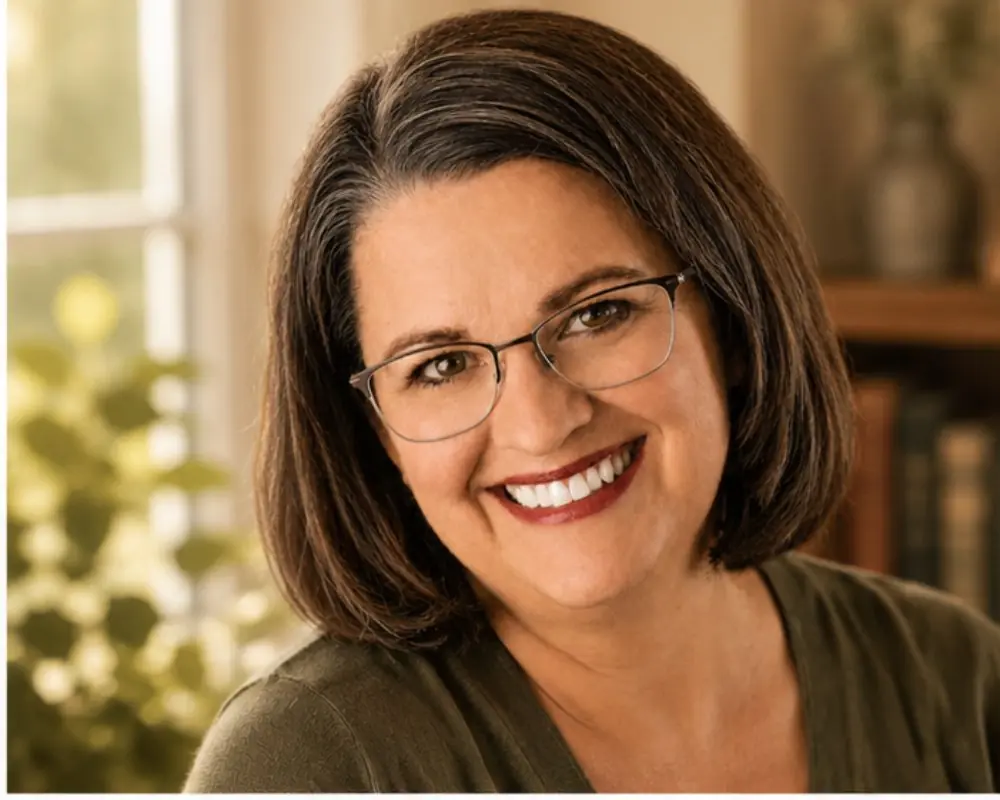
Liz Kirkby is a mother and a lifelong student of family. She lives with her husband Brian and has six children. She has walked alongside friends through difficult marriages, abusive relationships, and the quiet fractures that come when love isn’t enough on its own.
She founded PeaceTree because she believes every family is worth cultivating, not just the easy ones, and not just the ones in crisis. All of them.
If Liz’s story resonates with yours, we’d love to keep you close.