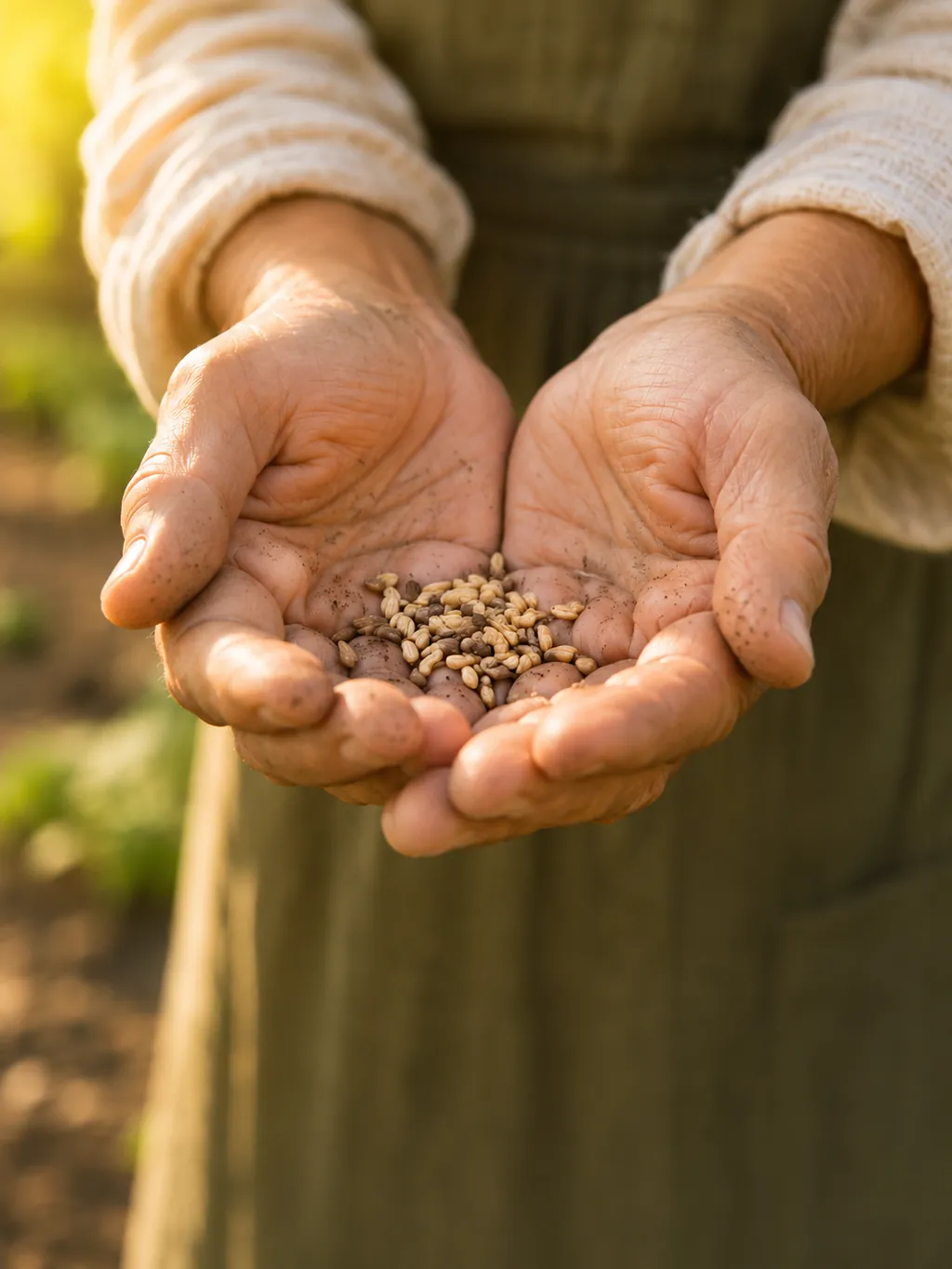
There is something both beautiful and unsettling about planting a seed.
We choose what to plant. We prepare the soil. We provide water, sunlight, and care. We do everything we know how to do to give that seed the best possible chance to grow.
And then we wait.
We cannot force it to sprout. We cannot dictate how quickly it grows, how strong it becomes, or whether it will ever produce the fruit we imagined.
So much of family life is like that.
As parents, grandparents, spouses, siblings, and children, we spend our lives planting seeds in one another.
We plant them through our words, our choices, our traditions, and the examples we set. We plant seeds of kindness, honesty, resilience, forgiveness, faith, and love.
And naturally, we hope those seeds will grow.
When the Harvest Looks Different
My husband and I raised six children.
For more than two decades, motherhood was at the center of nearly everything I did. We tried to build a home where our children would feel loved, develop strong values, and carry forward the things we believed mattered most.
We weren’t perfect parents. Not even close. There are things I would do differently if I could go back, and lessons I wish I’d understood sooner.
But we were sincere in our efforts. We planted what we believed were good seeds, and we nurtured them the best we knew how.
I don’t think I fully appreciated how much I had imagined the harvest until my children began growing into adulthood.
I had expectations about what our family would look like, the relationships we would share, the values that would carry forward, and the generations that might follow.
Some of those hopes have unfolded beautifully.
Others have not unfolded the way I imagined.
And that has been harder than I expected.
There is a particular kind of grief that comes when the future you envisioned for your family begins to look different. It’s not necessarily grief over the people themselves. I love my children deeply. It’s grief over expectations, over dreams you quietly carried for years, and over the realization that some things you hoped to pass along may not be embraced in the way you anticipated.
I’ve questioned myself more times than I can count.
Did I teach enough? Did I listen enough? Was I too strict about some things and too permissive about others? Did I spend so much time managing the responsibilities of raising a large family that I missed opportunities to truly connect?
And perhaps the hardest question: Did I somehow fail to give my children what they needed?
I don’t have simple answers to those questions.
But I’m beginning to understand something important.
Being responsible for what we sow is not the same as being responsible for everything that grows.
The People We Love Are Not Gardens We Own
We can offer love without guaranteeing how it will be received. We can teach values without determining which ones another person will embrace. We can model forgiveness without forcing reconciliation.
The people we love are not gardens we own. They are individuals with their own experiences, choices, struggles, and possibilities.
And their stories are still being written.
That last part matters to me.
Sometimes I catch myself looking at my adult children’s lives as though I’m examining the finished results of my parenting. As though the harvest is already in, and I’m supposed to determine whether all those years of effort were successful.
But that’s not fair to them. And it’s not fair to me.
Their lives are not finished. Neither is mine.
The relationships we share are still growing and changing. There are still opportunities to understand one another better, to repair what has been strained, and to discover new ways of being a family.
Perhaps some of the seeds I planted years ago are growing in ways I don’t recognize.
Perhaps some are still waiting.
And perhaps there are things I need to stop trying to grow so that I can appreciate what is already there.
We Are Still Sowing
I’ve realized that sowing isn’t something we finish when our children leave home.
We continue planting seeds throughout our lives.
An apology may not immediately repair a relationship, but it can create an opening for healing.
A word of encouragement may not seem to matter today, but perhaps it will be remembered years from now.
A simple act of kindness may communicate love more clearly than a hundred conversations about what someone ought to do.
And sometimes the most important seed we can plant is acceptance: the assurance that our love is not dependent upon another person’s choices matching our expectations.
That doesn’t mean abandoning our values or pretending differences don’t matter.
It means recognizing that love and agreement are not the same thing.
I can remain true to what I believe while making room for my children to become who they choose to be.
I can mourn expectations that haven’t been realized without allowing that grief to overshadow the people standing in front of me.
And I can continue cultivating relationships without insisting that they produce the particular harvest I once imagined.
A Legacy Still Growing
When I think about family legacy, I often think about the generations that came before us.
Much of who we are has been shaped by people whose lives we never knew. Their choices, sacrifices, strengths, and even their mistakes influenced the circumstances in which our own stories unfold.
In the same way, what we do today may reach far beyond our own lifetimes.
But legacy isn’t something we can manufacture or guarantee.
It is something we influence, one choice, one relationship, and one generation at a time.
And sometimes the legacy we leave is not the one we originally planned.
Perhaps it will be found in a child who remembers that, even when we disagreed, they were always welcome.
Perhaps it will be found in a relationship that survived difficult years because someone kept reaching out.
Perhaps it will be found in the courage to acknowledge our mistakes and choose a different way forward.
Or perhaps it will be something we never get to witness.
I’m learning to make peace with that uncertainty.
Not because I’ve stopped caring about the harvest, but because I’m beginning to understand that the value of what we plant cannot be measured only by what we get to see.
For me, that increasingly means learning to love the family I have, rather than holding so tightly to the family I once imagined.
It means recognizing that the work of cultivation is never really finished.
Our responsibility is not to control the harvest. It is to be thoughtful about the seeds we plant, generous in the care we offer, and patient with the growth we cannot see.
Because long after we’ve forgotten the small things we did today, something we planted may still be growing.
And that is reason enough to keep sowing.